3. Why it matters for employers
Shorter, accessible content may be the key to getting your people on board with learning and development. According to Software Advice, more than half of employees say they'd be more likely to use the training tools they're given if content were broken into shorter parts.¹
Short lessons let people learn new knowledge, processes and skills at their own pace. And when training is relevant to what they're doing right now, they're far more likely to complete it – and use it.
For the business, it means teams stay competent as things change – new products, limited-time offers, updated policies – without waiting for the next training cycle.
4. How to get started
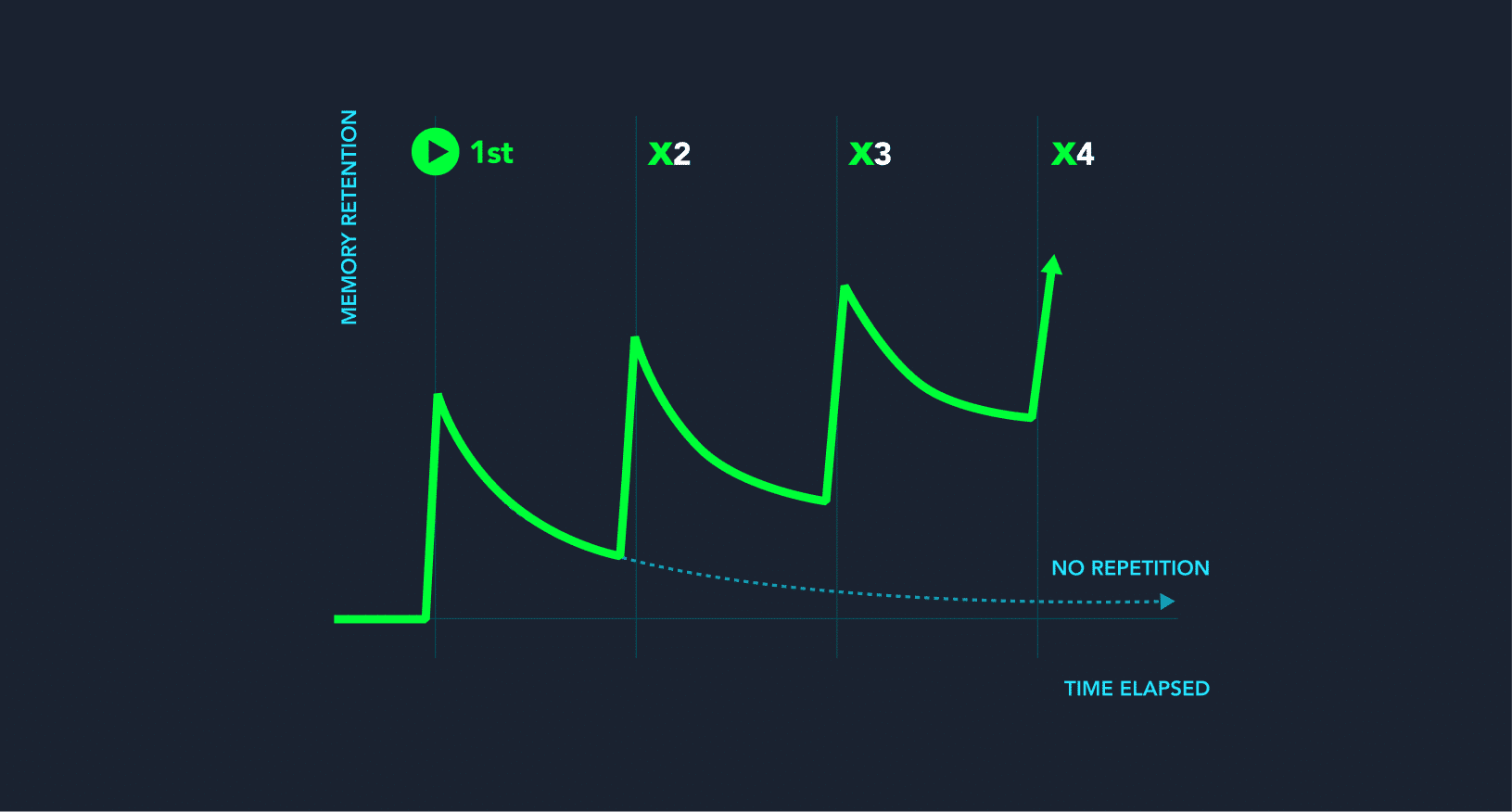
Make use of spaced repetition
Spaced repetition takes advantage of a memory phenomenon known as the spacing effect: our brains retain information better when learning is spread out over time. Here's how to use it:
Little and often: If you need to run in-person training, consider spreading it over a couple of days. It may take a little longer, but people are far more likely to retain what matters.
Think ahead: Schedule short refreshers for later – especially if you can't split the original training across several days.
Nudges: After a big learning day, follow up with short prompts, quizzes or activities that reinforce the key points.
Make it worth coming back to
A bit of friendly competition goes a long way. Scores, leaderboards and live quizzes give people a reason to replay training – the same way you'd play an arcade game “one more time” to beat your score. Every repetition builds mastery.
Keep it concise, keep it relevant
People are busy. You realistically have a 3 to 5 minute window, so cover one topic at a time and make it count. The more closely a lesson matches what people are about to do, the more of it they'll remember.
Build daily habits
According to psychologists, it can take up to two months (66 days) to form a habit.² If your teams have the time and access to do a few minutes of training every day, retention improves significantly – and you build a culture where people keep learning.
5. What just-in-time training looks like in practice
Just-in-time training comes in several short formats, each suited to a different moment:
- Short courses to explain a new product, process or policy the day it changes.
- Exams and quizzes to check understanding and reinforce key points.
- Branching dialogue simulations to rehearse a conversation before it happens for real.
- Surveys and pulse checks to see how teams are feeling and where they need support.
- An AI assistant trained on your own documents, so people get instant answers in the flow of work.
Make it mobile
People already use their phones for almost everything. Making training available on mobile means teams can learn when and where it suits them – even in five spare minutes on the bus home. Studies suggest mobile learners are nearly 50% more likely to complete training than desktop learners.³
Make it easy to access
People are more likely to take part when training is easy to reach. Keep it seamless, and connect it to the learning management system your people already use.
Ready to get the right training to your people at the right moment? See how just-in-time training works at Attensi, or speak with one of our experts.

 Guides

 Guides
 Guides
 Guides