
AI-native healthcare training
Healthcare training that gives time back to patient care
Get clinical and support staff confident on new systems and patient conversations faster — with practice-based training that fits around shifts, keeps people on the ward, and frees them for the work that matters most: caring for patients.
 40,000+
frontline staff hours returned to the wards
 95%
95%less training time, from 46 weeks to 2
 93%
93%average knowledge score, up from 31%
 150K+
150K+NHS staff trained across 30+ systems




Real results from healthcare teams


 40,000+
frontline staff hours returned to the wards
When classroom IT training stopped being an option, Liverpool University Hospitals trained staff on their new clinical system through a virtual patient, following her from admission to discharge. Training time fell from 46 weeks to 2, average knowledge scores rose from 31% to 93%, and 90% of staff said they could apply the skills in their daily work.

 67%
67%less training time, from 6 hours in the classroom to 2
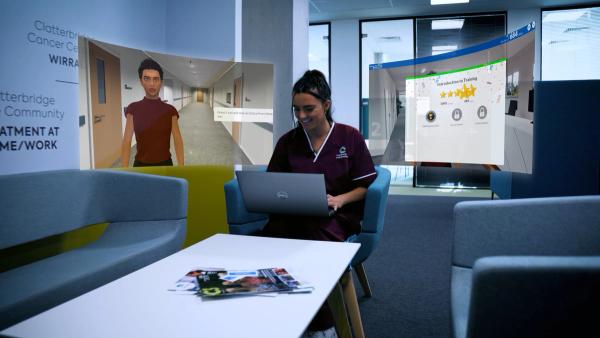
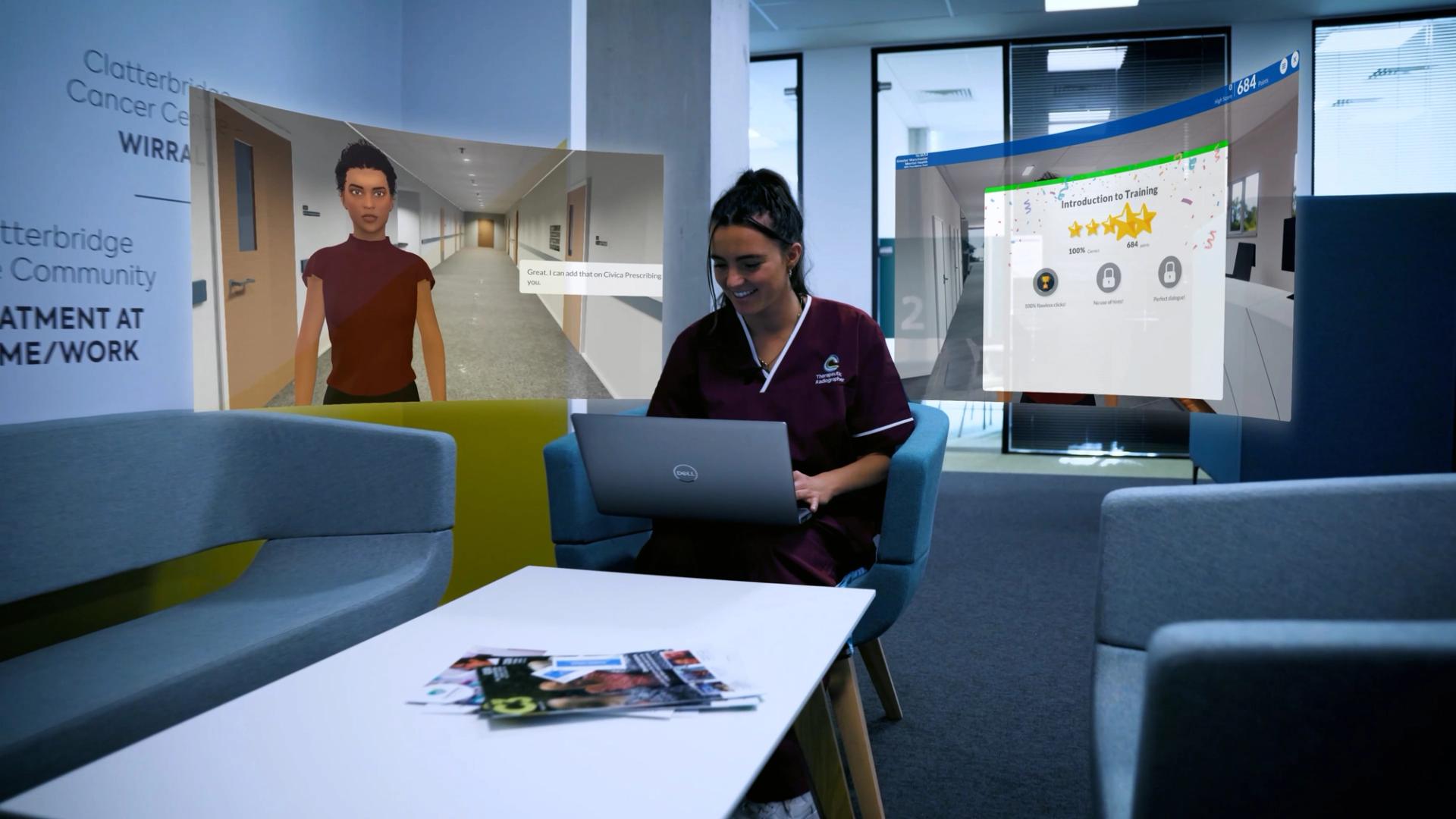
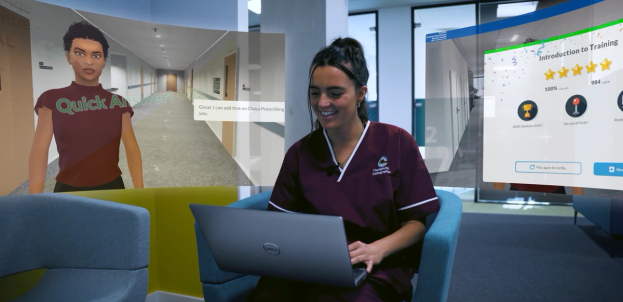
NHS Trusts across the North West replaced classroom system training with game-based simulations staff complete around busy wards. At Clatterbridge Cancer Centre, 95% of staff engaged and 92% felt more confident — and one radiographer found she used the system more efficiently, helping her see more cancer patients each day.


 5,000
5,000employees trained on new systems in two months
After a merger left Lillestrøm Municipality with over 9,000 employees, thousands of them, largely in healthcare, needed training on new admin and patient record systems, fast. Simulations replicating their exact tasks trained 5,000 staff in two months, a job classroom training would have taken two years to do. 93% said they would use what they learned in their daily work.
The challenge
Stretched teams. New systems. Less time for patients.

Healthcare runs on people who are already at capacity. Every new EPR module, clinical system, and process change lands on staff who have little time to learn it and even less time to spare — and every hour spent in a classroom is an hour away from patients.
The problem isn't the people. It's training models that pull staff off the floor, rely on backfill, and still leave them unsure when it counts:
- Releasing staff for classroom sessions is costly, hard to schedule, and often impossible on busy wards
- New systems go live before staff feel confident, so workarounds, errors, and calls to the helpdesk follow
- Digital investments only deliver value when staff adopt them — and slow adoption means time lost to admin instead of care
- Difficult patient conversations — breaking bad news, calming anxious relatives, handling frustration — are learned on the job, with real patients
- Completion records look fine. Confidence and competence in daily practice are unknown.
The solution
Practice-based training that frees your people for the human side of care

The fastest way to give time back to care is to make the systems and routines around it second nature. That means replacing long classroom sessions with realistic practice staff can do in short bursts, on any device, around their shifts.
Attensi is built around the reality of your organization — your clinical systems, your workflows, your roles, and the patients your teams meet every day. Staff practice EPR navigation, documentation, ordering, and discharge in simulations of the screens they use, following a virtual patient from admission to discharge until the steps become instinct.
With Attensi RealTalk, they also rehearse the conversations that matter most — with AI patients and relatives who respond naturally to what they say. Explaining a diagnosis, handling a complaint, or reassuring someone who is scared: practiced safely, repeated until confident, before it happens at the bedside.
When systems stop getting in the way, attention goes back where it belongs. Less time on screens and admin. More time, and more confidence, for the patient in front of you.
How it works
Three steps to a confident, care-ready workforce
Design and deploy training
Build scenarios around your clinical systems, workflows, and the real patient interactions your teams will face. AI-assisted authoring means you can create realistic training fast, and update it instantly when systems change, new modules go live, or local procedures shift.
Practice-based training
Learning modules in the form of a game drive motivation, fueling voluntary repetition that builds competence. From day one, staff have a tailored learning path for their role, learn from mistakes, and get personalized feedback. With training accessible on any device, staff can practice around shifts and handovers — without leaving the ward.
Track and measure performance
Data that reveals where skills are strong and where confidence is slipping, across every role, ward, and site. Go beyond completion rates and see how training impacts what matters: go-live readiness, system adoption, time released back to care, and confidence in patient interactions.
NHS IT training
Built for NHS Trusts and their digital programmes
From EPR go-lives to BAU optimization, see how Trusts across the UK certify staff before launch, integrate with ESR, and prove readiness with data.
Platform features
Built for how healthcare actually works
Attensi is purpose-built for clinical and support teams who can't step away from patients for long.

Practice on your real systems, risk-free
Simulations mirror your EPR and clinical system screens and workflows, so staff master documentation, ordering, and discharge before they touch live patient records.
AI patient and relative conversations
With RealTalk, staff rehearse difficult conversations with AI characters that respond to tone and words, with scoring and feedback after every attempt.

Game mechanics that bring staff back
Scoring, progression, and instant feedback make short, repeated practice feel worth doing between shifts and handovers.

Training that fits around shifts
Mobile-first delivery means staff train in short sessions on any device, without classroom release or backfill.

Real-time readiness data
See competence and confidence by role, ward, department, and site, and act on gaps before go-live or before they reach patients.

One platform. Connects with everything you already use.
Run training on Attensi Engage or connect to your existing LMS through SCORM, xAPI, LTI, and SSO, with nothing to rip out and replace.
Customer Success
Your success is important to us — even beyond launch

From planning to full rollout — and everything in between — you have a dedicated team that works alongside yours.
How Attensi differs from traditional training
Frequently asked questions
Common questions from healthcare organizations
Can't find what you're looking for? Talk to our team.
By replacing classroom sessions with simulation training staff complete in short sessions on any device, around their shifts. Liverpool University Hospitals cut system training time from 46 weeks to 2, returning more than 40,000 hours to frontline care.
The most effective approach is simulation training built around your specific system and workflows, not generic e-learning. Staff practice the exact screens and steps they will use, repeatedly, so they are confident on day one — and program teams can see readiness data before launch.
Attensi can be configured around a wide range of clinical, operational, and administrative systems, including platforms such as Epic, Cerner, Meditech, SystmOne, EMIS, and Nervecentre. Training mirrors your own configuration and local workflows, and can be updated when systems change.
AI role-play lets staff practice difficult conversations — explaining a diagnosis, handling a complaint, calming an anxious relative — with AI characters that respond to what they say. Every attempt is scored with specific feedback, so staff build confidence before the real conversation happens.
No. It complements it. RealTalk gives staff unlimited, low-pressure repetition between formal sessions, so the skills taught in communication training become habits in daily practice.
Yes. Attensi creates role-based pathways for nurses, doctors, allied health professionals, admin and operational staff, students, and temporary workers, so each group practices the workflows and conversations that matter in their role.
Yes. Training runs in short, flexible sessions on any device, around shifts, handovers, and clinic demands. More than 5,000 NHS employees completed system training this way, with no replacement staff required.
Yes. Attensi runs on its own platform, Attensi Engage, or connects to your current LMS through SCORM, xAPI, LTI, and SSO — so completions and certifications flow into your existing records.
Yes — Attensi supports 50+ languages and is used in more than 150 countries, so one standard can be delivered across sites, regions, and diverse workforces.
Attensi provides real-time data on knowledge gap closure, confidence, and progress for every learner, role, and site. Leaders can connect training to go-live readiness, system adoption, and time released back to patient care.
“We wouldn’t have had a trained, efficient, effective workforce without Attensi.”
“Attensi ensures staff are competent with EPMA by creating a safe space where they can practice, build confidence, and complete tasks correctly through repetition. The wards are that busy that they cannot release staff for a long space of time.”
“Attensi training was exciting and reminded me of SIMS, which I love to play. It’s highly personalized using my name and an avatar that looks like me.”

See it in action
Book a demo built around your care teams
Tell us about your organization, systems, and workforce. We'll show you how Attensi helps healthcare teams adopt new systems faster, handle patient conversations with confidence, and spend more time on care.