Experiential Learning
Where practice becomes instinct
Competence comes from repetition, not completion. Employees practice realistic, role-specific scenarios — upselling a customer, logging a system correctly, spotting a safety hazard — so the right response is instinctive before it counts.


Built for every kind of practice
Moving from knowledge transfer to competence means repeating realistic scenarios until the right response is instinctive. Employees practice the exact scenarios they'll face on the job — bite-sized games, branching decisions with real consequences, and 1:1 replicas of your systems and stores.

Build employee competence
Game-based training, bite-sized and mobile-first, that employees replay voluntarily, closing knowledge gaps through repetition rather than a single pass.

Strengthen decision-making skills
Branching scenario simulations where every choice has a consequence, so people rehearse judgment calls before they make them for real.

Eliminate system errors from day one
Guided IT systems training inside a replica of the actual software, certifying staff as ready before go-live.
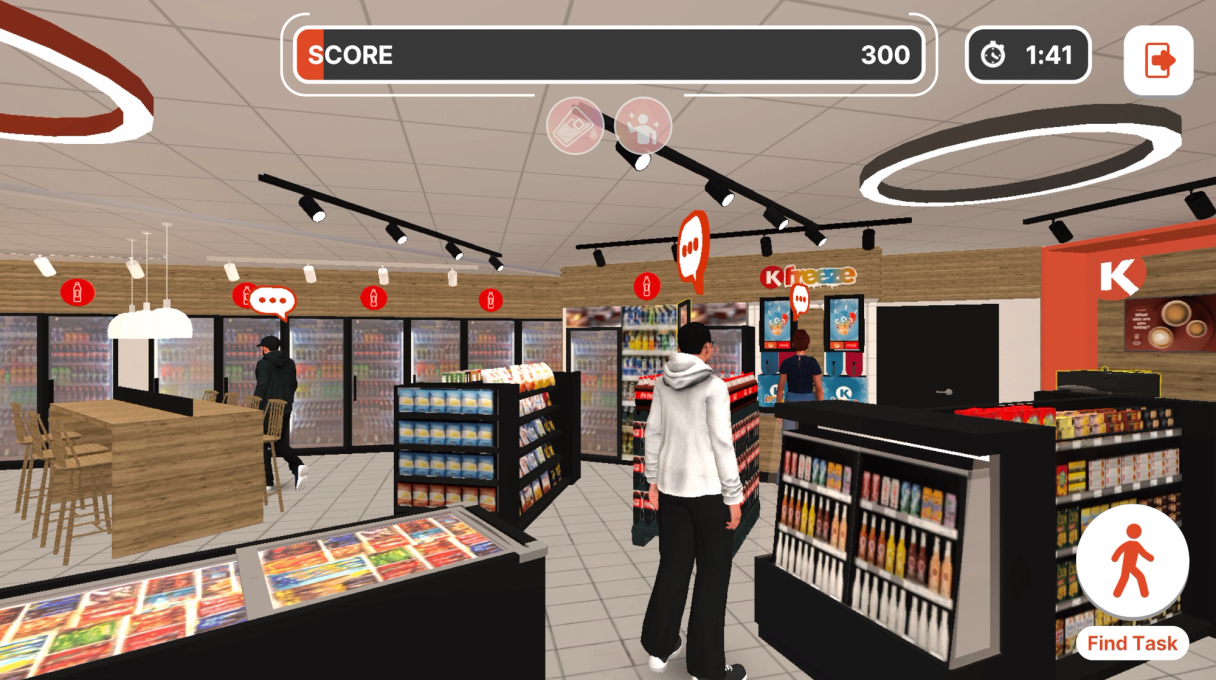
Raise the standard on the floor
3D simulation training built as a 1:1 digital replica of the physical workplace, proving store or site readiness before someone's on the real floor.
Game-based knowledge training
Bite-sized practice, built to be repeated
16+ game formats — dialogues, bubble popping, matching, swiping, fill-in-the-blank — built mobile-first around story-driven progression. Leaderboards and points turn repetition into something people choose to do. Every replay closes another piece of the knowledge gap.
Branching scenario simulation
Every decision has a consequence
Learners work through role simulations — a difficult customer conversation, a judgment call, a process decision — where every choice branches into a different outcome. Branching scenarios can now run on AI-generated dialogue and feedback instead of a fixed decision tree, so no two attempts play out the same way, while still scoring against defined objectives.
IT and systems process training
Certified and ready before go-live
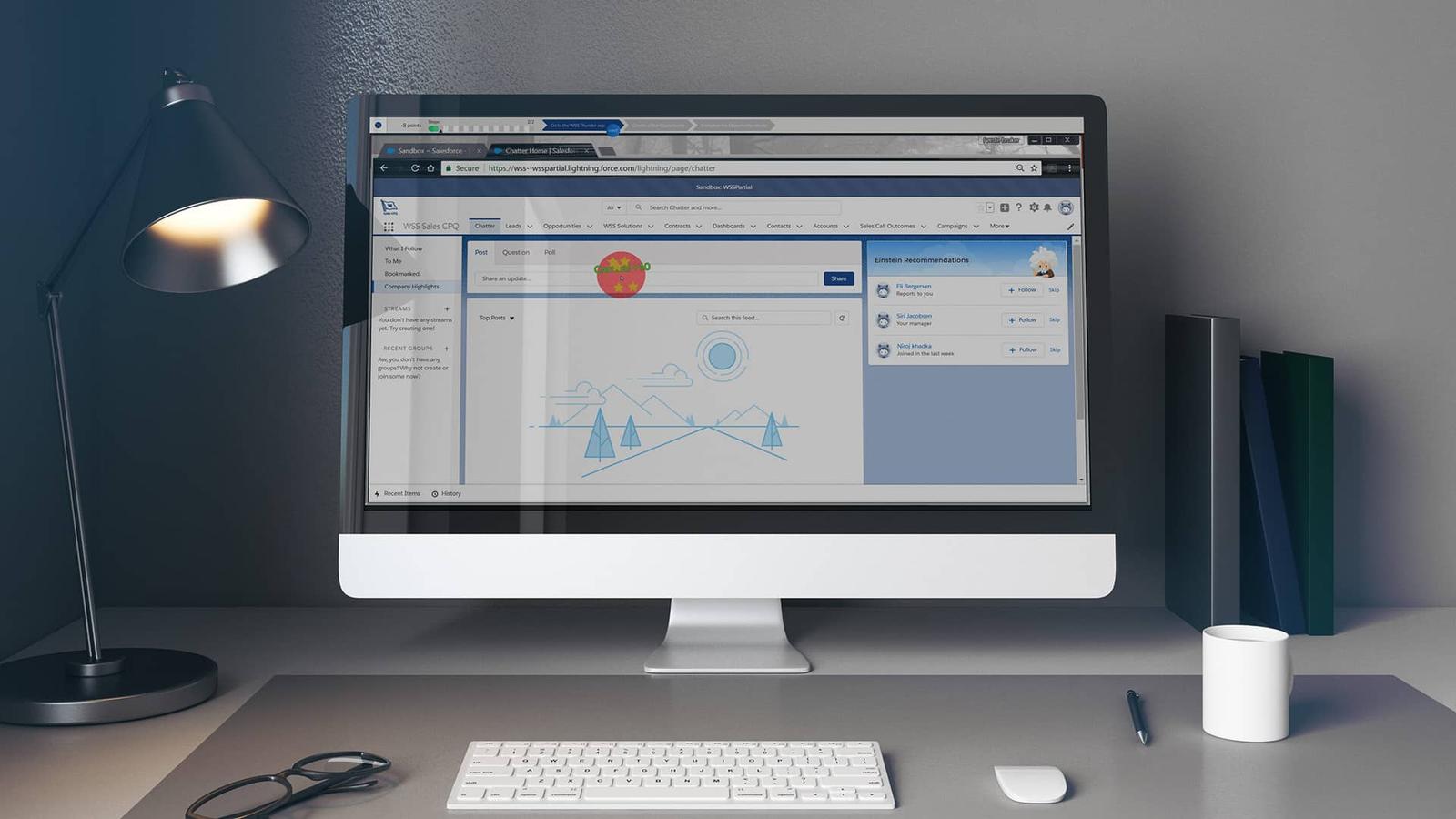
Heat map guidance shows learners exactly where to click inside a replica of the real system, then removes it for independent certification. Built to mirror the actual software and drive adoption from day one — the approach behind Attensi's NHS and healthcare IT training.
3D environment simulation
A 1:1 replica of the real workplace
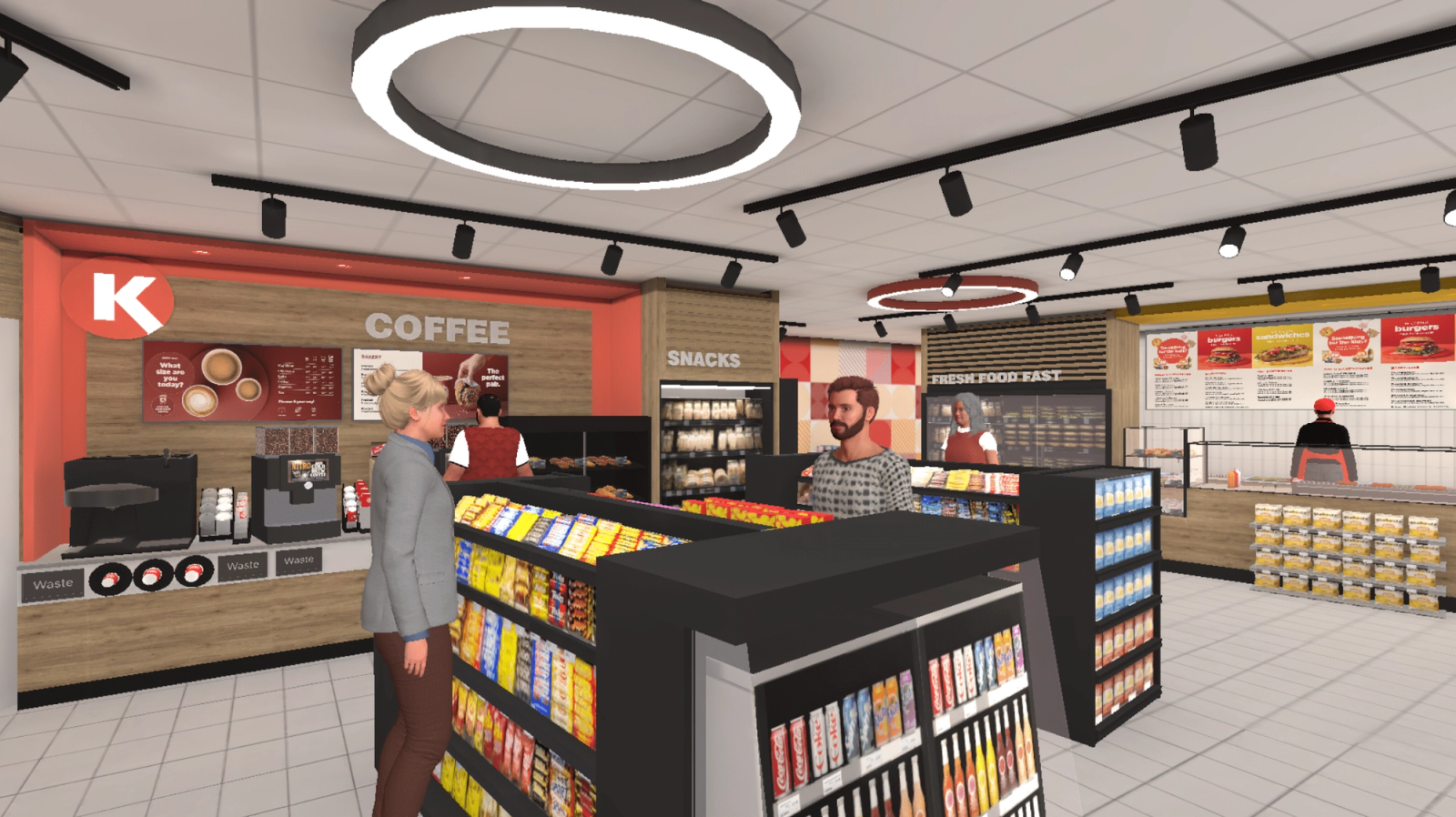
A lifelike 3D recreation of a store, restaurant, or site where employees complete objective-based tasks — stocking shelves, serving customers, spotting hazards — before they're on the real floor. Built for operational readiness and safety training at scale.
What customers say about Attensi
"What matters is that they leave the learning experience ready to do the work."
"We can see the competency... we've closed the knowledge gap and got full compliance."
"Colleagues who completed the Attensi program have improved their performance versus those who didn't."
Customer results
How Star Pubs cut onboarding time by 50%

50% faster onboarding

95% average audit score, up from 87%
6% EBITDA increase
"The pubs where staff are really engaged with the content, their sales are better by 4% than the ones that have less engagement. And their profit is better by 6%."
Tracy Bickerdike, Head of Licensee Development & Training, Star Pubs
Features and Capabilities
Everything you need to build real-world competence
16+ game formats
Dialogues, bubble popping, matching, swiping, fill-in-the-blank, and more.
Heat map guided practice
See exactly where to click, then take the guidance away for certification.
AI-generated conversations
Branching dialogue that responds and gives feedback in the moment, not a fixed script.
1:1 environment replicas
3D recreations of the actual store, restaurant, or site.
Leaderboards and story-driven progression
Points and maps that make repetition something people choose.
Independent certification mode
Guidance removed so a pass proves readiness, not just completion.
Frequently asked questions
FAQ about experiential learning
Can’t find what you’re looking for? Talk to our team.
A digital adoption platform helps employees learn new software by guiding them inside the real interface instead of a separate training module. Attensi's approach adds heat map guidance and independent certification, so a pass proves someone can actually use the system — not just that they sat through a walkthrough.
Scenario-based training puts a learner inside a realistic situation where their decisions lead to different outcomes, mirroring the consequences of a real conversation or task. Some scenario-based training now runs on AI-generated dialogue, so the conversation responds differently depending on what the learner says.
Digital adoption platforms are built specifically to increase how quickly and confidently employees use new software, by replacing passive documentation with guided, hands-on practice. Removing guidance for a certification pass is what turns that practice into measurable readiness.
3D training simulation software creates a digital replica of a physical environment — a store, restaurant, or site — where employees complete real tasks before doing them on the job. It's used to close the gap between training and the actual floor.
Training simulation software recreates real job scenarios — a conversation, a system, a physical space — so employees can practice and be scored on how they perform, not just whether they completed a module.
Compliance training games turn a regulatory requirement into a short, replayable exercise, testing whether an employee can apply a rule correctly rather than just confirming they read it. Independent certification mode removes on-screen prompts so a pass reflects real understanding.
Spaced repetition training has learners return to material at increasing intervals, which closes knowledge gaps more effectively than a single pass. Game-based formats with leaderboards and points are built to make that repetition something employees choose to do.
Digital adoption platforms work by overlaying guidance directly onto the real software interface, showing employees exactly where to click as they perform actual tasks. That guidance is then removed for a certification stage, so the platform can confirm readiness rather than just completion.